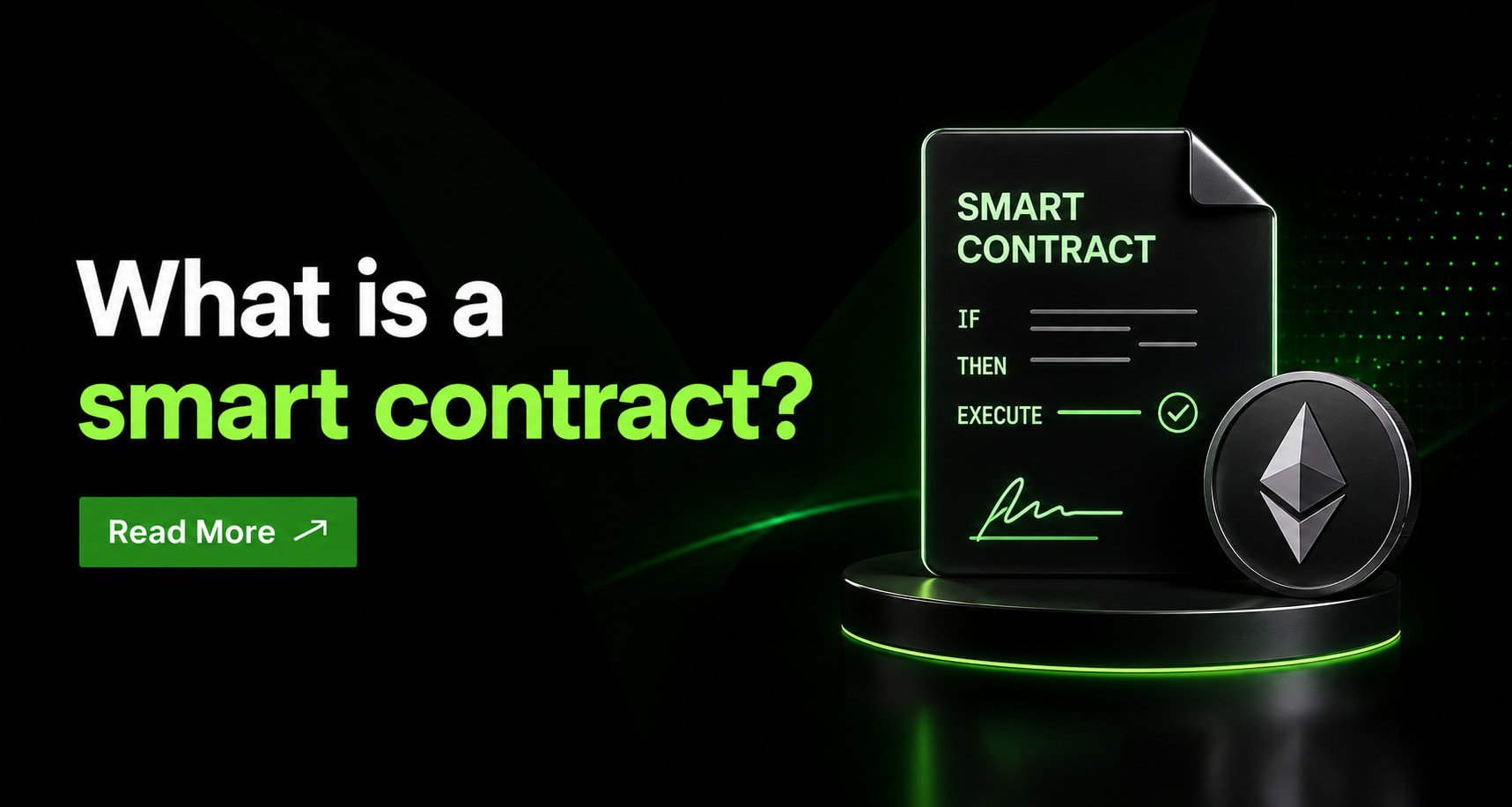
Smart contracts power DeFi — but even one line of bad code can lead to multimillion-dollar losses. This article explains how hacks and exploits occur, why prevention is the only real protection, and what US investors can do to secure their crypto with audits, custody, and smarter on-chain habits.
.jpg)
Decentralised finance (DeFi) is built on smart contracts — self-executing programs that replace traditional intermediaries. They hold assets, enforce rules, and
move money automatically when specific conditions are met. Across the US, more investors than ever are using these systems for lending, staking, and trading.
As UpTrade’s research team often explains to clients, “In traditional finance, you can call your bank if something goes wrong. In DeFi, your bank is a line of code.”
Smart contracts create efficiency — but they also create attack surfaces.
Most DeFi hacks don’t start with brute force; they start with bugs.A small logic error or untested function can let attackers exploit the contract’s design.
Instead of hacking a wallet, they manipulate how the code behaves — redirecting funds or draining liquidity pools in minutes. Attackers study the public code,
search for weaknesses, and simulate transactions until they find one that breaks the rules in their favour.
Once it works, they strike — and because blockchain transactions are irreversible, the stolen funds are gone forever. In one major incident re ferenced in the
Uptrade team’s transcript, a DeFi protocol was drained of hundreds of millions of dollars overnight due to a single variable error. No passwords were stolen, no servers
breached — the contract simply executed as written, not as intended.
Here’s how most exploits unfold:
Because blockchain transactions are transparent but pseudonymous, attackers can move billions in plain sight — and recovery efforts often stall before any
progress is made.
Once a smart contract exploit occurs, reversing it is nearly impossible. The blockchain’s immutability — its biggest strength — becomes its biggest weakness.
Law enforcement can trace funds across addresses, but without a central authority to freeze them, victims often have no legal path to recovery. Even when attackers
are identified, jurisdictional barriers make prosecution slow.
Occasionally, “white-hat” hackers return funds voluntarily after negotiating a bounty — but that’s the exception, not the rule. This is why security and due diligence
matter more in DeFi than in any other sector of crypto. Prevention is the only real protection.
Despite high-profile exploits, billions of dollars remain locked in DeFi smart contracts. Why? Because when they’re well-written and audited, they work flawlessly.
Smart contracts remove human bias, reduce cost, and execute transactions automatically. They allow anyone — not just institutions — to lend, borrow, or trade
transparently. Most major DeFi platforms undergo multiple independent audits from cybersecurity firms before launch. These audits stress-test code and simulate
attacks, often catching vulnerabilities early.But even audited projects aren’t invincible. New features, contract upgrades, or integrations can reintroduce risks.
That’s why sophisticated investors don’t just read whitepapers — they read audit reports.
The US regulatory environment is actively catching up with DeFi's pace. The SEC and CFTC are both asserting jurisdiction over DeFi protocols, while FinCEN's AML requirements apply to many platforms serving US users.
Projects that allow Americans to deposit funds may be subject to securities laws and money transmission regulations.
Until clearer legislation arrives, responsibility lies largely with investors themselves — choosing verified, audited, and compliant platforms is the best defence against loss.
Even in 2025, many investors still fall for DeFi protocols promising impossible returns. When a project claims 200% APY “risk-free,” it’s usually paying users with freshly
minted tokens — not real revenue. These unsustainable rewards attract capital quickly, creating Ponzi-like dynamics where early participants profit from later deposits.
Once inflows slow, the system collapses, leaving investors with worthless tokens. The warning signs are consistent: unaudited code, anonymous teams, and token-based
rewards instead of external income streams. As Uptrade’s research head noted, “Greed is the oldest exploit in crypto — it just keeps being rewritten in new code.”
It’s easy to blame DeFi for hacks, but centralised platforms have failed just as spectacularly. From exchange collapses to frozen withdrawals, the last few years have
shown that custody risk exists everywhere. The difference is transparency: when a smart contract fails, you can see the attack unfold on-chain in real time.
When a centralised exchange fails, users often discover it too late.The lesson isn’t to avoid DeFi — it’s to understand what you’re using and control your own custody.
Understanding these attack surfaces helps investors spot risky designs before they risk capital.
Only interact with contracts that have undergone third-party audits from reputable firms. Review the audit summary — don’t just trust a logo on the homepage.
Don’t lock all funds into one platform. Spread positions across several trusted protocols to reduce systemic risk.
When connecting a wallet, only approve the amount needed for a single transaction. Revoke unnecessary permissions regularly using wallet tools like Revoke.cash
or Etherscan Token Approvals.
For long-term holdings, use hardware wallets that require physical confirmation for every transaction.
Fake websites and impostor Telegram accounts remain major entry points for attackers. Always double-check URLs and official announcements.
Some platforms advertise “DeFi insurance” against hacks, but most of these policies have narrow coverage or slow payouts.
The best defence remains knowledge and caution.
Learn how to read smart contract audits, track community reputation, and understand token incentives.
If you don’t understand how a protocol generates yield, assume the risk is higher than advertised.
Remember: the blockchain is transparent.
Every major attack leaves public data trails — and those who study them are the least likely to repeat others’ mistakes.
Each major hack, while painful, pushes the industry forward. Developers patch vulnerabilities, auditors tighten standards, and users become more aware.That feedback
loop is how DeFi evolves — through hard lessons and better code. For investors, staying informed means understanding that risk and reward are inseparable.Smart contracts
are neutral; they simply do what they’re programmed to do. The responsibility to use them wisely rests with us.
Smart contracts are revolutionising finance, but innovation always attracts risk. Every exploit teaches investors to ask smarter questions and demand stronger safeguards.
DeFi will keep evolving — the challenge is evolving with it.
UpTrade helps American investors explore decentralised finance safely — providing research, risk assessment, and secure custody to protect your crypto from hacks and
smart-contract vulnerabilities.
General information only. This article is for educational purposes and does not constitute financial, investment, legal or tax advice, nor a recommendation to buy, sell or hold any asset. Cryptocurrency is a high-risk asset and you should consider your own circumstances and seek independent advice before making any decision. UpTrade does not make price predictions.

Market updates, new explainers and the occasional Alpha Pro report, sent once a week. Unsubscribe anytime.