Bitcoin's price has risen and fallen in roughly four-year waves since it launched. Here's what the halving is and why the pattern keeps repeating.
The Bitcoin cycle is one of the most talked-about ideas in crypto, and it is simpler than it sounds. In short, Bitcoin's price has tended to rise to a peak and then fall over a span of roughly four years, again and again. This pattern is often called the Bitcoin four-year cycle, and it is tied to an event known as the halving. This guide explains the cycle in plain English: what the Bitcoin halving is, why the pattern runs about every four years, its four phases, and why it might not repeat.
The Bitcoin cycle is a pattern in Bitcoin's price that has repeated a few times since it launched. Roughly every four years, the price has climbed to a high, dropped sharply, then slowly recovered before climbing again. Because each loop has taken about four years, it is often called the Bitcoin four-year cycle, or the Bitcoin market cycle.
Two things matter up front. This is a pattern from the past, not a rule, and no one can reliably predict where the price will go or when. What we can do is understand what drives it. That driver is the halving.
The Bitcoin halving is the event at the heart of the cycle. New Bitcoin is created as a reward for the computers, called miners, that keep the network running. About every four years, that reward is cut in half. This is the halving, and it means new Bitcoin is created more slowly overnight. Since Bitcoin is capped at 21 million coins, each halving makes new supply scarcer.
Bitcoin has had four halvings so far, and each has roughly lined up with the start of a price rise. The idea behind the cycle is supply and demand: when a halving slows new supply and demand holds or grows, prices have historically risen. Our guide to tokenomics goes deeper on how supply is designed.
So why four years? It is built into Bitcoin's code. A halving happens every 210,000 blocks, and reaching that many takes about four years on average. That timing gives the Bitcoin four-year cycle its name.
The pattern that follows tends to look the same. In the year or so after a halving, the price has often risen to a new high. Then it has fallen into a long slump, before slowly recovering over the next couple of years, just as the next halving arrives. One halving, one cycle, roughly every four years, which is why it is also called the Bitcoin halving cycle. Still, this is a rough pattern, not a precise schedule, and the price moves have varied a lot from one cycle to the next.
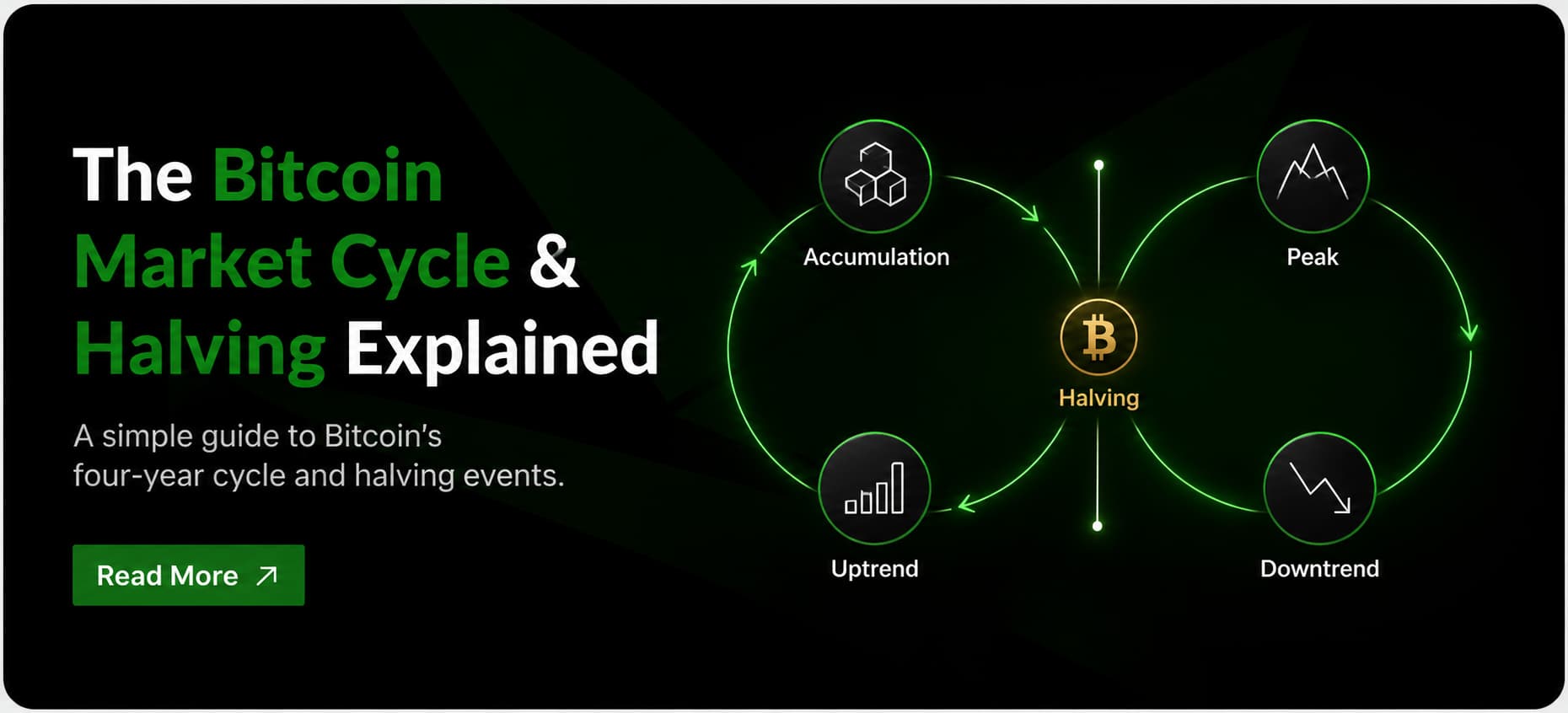
Within each four-year cycle, Bitcoin's price tends to move through four phases. A simple way to picture them is the four seasons, each with its own mood. These phases are not unique to Bitcoin and show up across many markets.
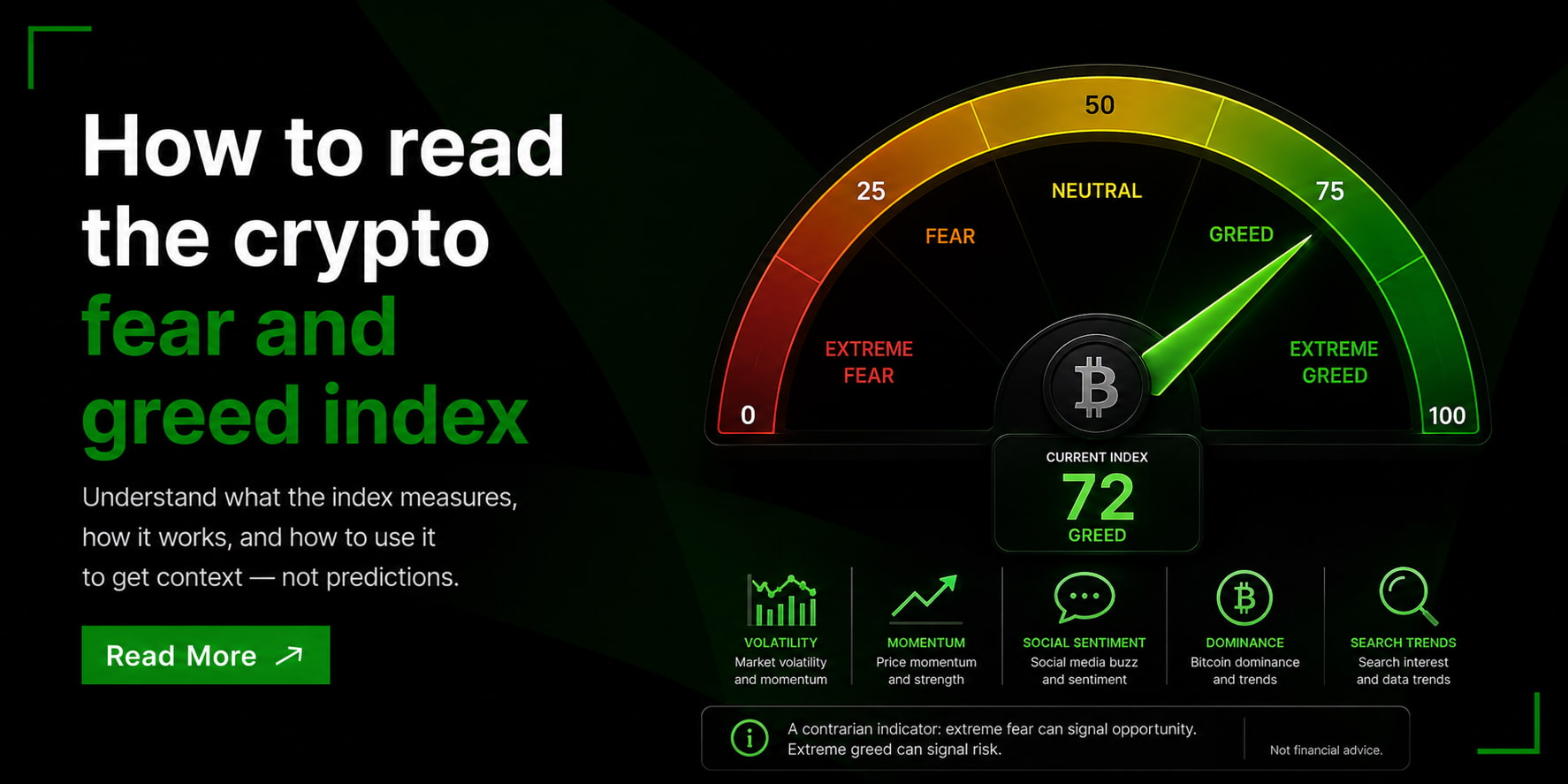
In plain terms, things start quiet, then interest returns and the price climbs, often after a halving. Near the top, excitement and headlines take over, which is often when it stalls. Then comes a long fall, sometimes called a crypto winter, before the quiet returns and the cycle resets. Tools like the fear and greed index try to track that shifting mood.
Does the four-year cycle still hold? Honestly, no one knows. The pattern has repeated a few times, but past performance is never a promise about the future.
There are real reasons it could change. Large players like companies and funds have entered the market, and new products such as exchange-traded funds have changed who is buying. Each halving also makes a smaller dent in supply than the last, so its effect may fade. Some expect the four-year rhythm to continue, and others think it will weaken. This guide takes no side and makes no prediction.
So what does this mean if you are new to Bitcoin? Mainly, it is useful context, not a crystal ball. Knowing Bitcoin has moved in long, volatile cycles helps set expectations. Sharp rises and steep falls are a normal part of its history.
It is not a way to time the market, though. Buying the exact bottom or selling the exact top is extremely hard, even for professionals, and getting it wrong is costly. Bitcoin is a volatile, high-risk asset, and this article is general education, not financial advice. Whatever you decide, base it on your own research and circumstances. If you do decide to buy some Bitcoin, our how to buy Bitcoin page covers the steps.
The Bitcoin cycle is a repeating pattern in Bitcoin's price. Since it launched, the price has tended to rise to a peak, fall sharply, and slowly recover over about four years, before starting again. It is tied to the halving. It is a historical pattern, though, not a guarantee about the future.
The Bitcoin four-year cycle is the roughly four-year span over which Bitcoin's price has historically risen and fallen. It takes its name from the halving, which happens about every four years and has tended to line up with the start of each price rise. Like any pattern based on a few examples, it may or may not repeat.
The Bitcoin halving cycle is another name for the same four-year pattern, seen through the halving. Every four years or so, the reward for mining new Bitcoin is halved, which reduces new supply. A price rise has often followed, then a fall, forming a cycle around each halving. The next halving is expected around 2028.
Historically, about four years, measured from one halving to the next, which is why it is called the four-year cycle. The halving's timing is predictable because it is set by Bitcoin's code, but the price moves around it are not, and they have varied from one cycle to the next.
No one knows, and it is a genuine debate. The pattern has repeated a few times, but that is a small sample, and Bitcoin is changing as institutions and new products enter the market. Some expect the cycle to continue, and others think it will fade. This is not a prediction, and past performance is not a guide to future results.
General information only. This article is for educational purposes and does not constitute financial, investment, legal or tax advice, nor a recommendation to buy, sell or hold any asset. Cryptocurrency is a high-risk asset and you should consider your own circumstances and seek independent advice before making any decision. UpTrade does not make price predictions.

Market updates, new explainers and the occasional Alpha Pro report, sent once a week. Unsubscribe anytime.